
At £2,756.17 band D, Lewes is the dearest of England's 164 shire districts. The full A to H table for all 28 parish areas, and what each precept added.
Lewes district has the highest average council tax bill of any shire district in England for 2026/27. At band D the district average is £2,756.17, which is higher than all 163 of the other English shire districts and second among all 296 billing authorities in England, behind only Dorset at £2,765.02.
That is not the district council’s doing. Lewes District Council’s own share of your bill is £242.02, less than 9% of the total, and it went up by 2.99%. The bulk goes elsewhere.
The figures here come from Lewes District Council’s own Council Tax Leaflet 2026-27 and from the government’s council tax levels statistics for 2026 to 2027, published on 25 March 2026. They were checked on 31 August 2026.
What is in your bill
Five bodies take a share. At band D, on the district average:
| Body | Band D 2026/27 | Change |
|---|---|---|
| East Sussex County Council | £1,960.29 | up 4.99%, including a 2% adult social care precept |
| Sussex Police and Crime Commissioner | £281.91 | up £15, or 5.62% |
| Town and parish councils (district average) | £154.46 | up 5.83% |
| Lewes District Council | £242.02 | up £7.03, or 2.99% |
| East Sussex Fire Authority | £117.49 | up £5, or 4.44% |
| Total | £2,756.17 |
For comparison, the England average band D bill including parish precepts is £2,391.52. A Lewes district household at band D pays about £365 more than the English average.
Two of the five are above their national averages and two are below. East Sussex County Council charges £1,960.29 against a shire county average of £1,802.36. East Sussex Fire Authority charges £117.49 against a fire authority average of £98.40. Sussex Police charges £281.91 against a police and crime commissioner average of £297.48, and Lewes District Council charges £242.02 against a shire district average of £221.60.
The council’s own website has the wrong total
Lewes District Council’s where your council tax goes page puts the parish and town share at £167.42 and the total at £2,769.13. Its own leaflet says £154.46 and £2,756.17.
The leaflet is right. Add up the parish precepts in its own table, £6,050,541, and divide by the district’s tax base of 39,173, and you get £154.46. The government’s published figure for the area is £2,756.17 too. Use £2,756.17.
The full band A to H table for every parish area
This is the table the council prints on page 6 of its leaflet, as a PDF image, which is why it does not appear in any search result. These are total bills, including the county, police and fire precepts.
| Parish or area | A | B | C | D | E | F | G | H |
|---|---|---|---|---|---|---|---|---|
| Barcombe | £1,765.27 | £2,059.47 | £2,353.70 | £2,647.90 | £3,236.33 | £3,824.74 | £4,413.17 | £5,295.80 |
| Beddingham and Glynde | £1,801.59 | £2,101.85 | £2,402.12 | £2,702.38 | £3,302.91 | £3,903.44 | £4,503.97 | £5,404.76 |
| Chailey | £1,764.78 | £2,058.90 | £2,353.04 | £2,647.16 | £3,235.42 | £3,823.67 | £4,411.94 | £5,294.32 |
| Ditchling | £1,801.35 | £2,101.57 | £2,401.80 | £2,702.02 | £3,302.47 | £3,902.92 | £4,503.37 | £5,404.04 |
| East Chiltington | £1,753.00 | £2,045.15 | £2,337.33 | £2,629.49 | £3,213.83 | £3,798.15 | £4,382.49 | £5,258.98 |
| Falmer | £1,735.30 | £2,024.50 | £2,313.73 | £2,602.94 | £3,181.38 | £3,759.80 | £4,338.24 | £5,205.88 |
| Firle | £1,788.72 | £2,086.84 | £2,384.97 | £2,683.08 | £3,279.32 | £3,875.56 | £4,471.80 | £5,366.16 |
| Hamsey | £1,767.78 | £2,062.41 | £2,357.05 | £2,651.67 | £3,240.93 | £3,830.19 | £4,419.45 | £5,303.34 |
| Iford | £1,721.86 | £2,008.82 | £2,295.81 | £2,582.78 | £3,156.74 | £3,730.68 | £4,304.64 | £5,165.56 |
| Kingston | £1,818.48 | £2,121.55 | £2,424.64 | £2,727.71 | £3,333.87 | £3,940.02 | £4,546.19 | £5,455.42 |
| Lewes | £1,925.36 | £2,246.24 | £2,567.15 | £2,888.03 | £3,529.82 | £4,171.60 | £4,813.39 | £5,776.06 |
| Newhaven | £1,887.83 | £2,202.46 | £2,517.11 | £2,831.74 | £3,461.02 | £4,090.29 | £4,719.57 | £5,663.48 |
| Newick | £1,768.50 | £2,063.25 | £2,358.01 | £2,652.75 | £3,242.25 | £3,831.75 | £4,421.25 | £5,305.50 |
| Peacehaven | £1,860.13 | £2,170.14 | £2,480.18 | £2,790.19 | £3,410.24 | £4,030.27 | £4,650.32 | £5,580.38 |
| Piddinghoe | £1,789.36 | £2,087.58 | £2,385.82 | £2,684.04 | £3,280.50 | £3,876.95 | £4,473.40 | £5,368.08 |
| Plumpton | £1,815.12 | £2,117.63 | £2,420.16 | £2,722.67 | £3,327.71 | £3,932.74 | £4,537.79 | £5,445.34 |
| Ringmer | £1,773.13 | £2,068.64 | £2,364.18 | £2,659.69 | £3,250.74 | £3,841.77 | £4,432.82 | £5,319.38 |
| Rodmell | £1,786.32 | £2,084.04 | £2,381.77 | £2,679.48 | £3,274.92 | £3,870.36 | £4,465.80 | £5,358.96 |
| St Ann Without | £1,721.86 | £2,008.82 | £2,295.81 | £2,582.78 | £3,156.74 | £3,730.68 | £4,304.64 | £5,165.56 |
| St John Without | £1,721.86 | £2,008.82 | £2,295.81 | £2,582.78 | £3,156.74 | £3,730.68 | £4,304.64 | £5,165.56 |
| Seaford | £1,813.75 | £2,116.03 | £2,418.34 | £2,720.62 | £3,325.21 | £3,929.78 | £4,534.37 | £5,441.24 |
| Southease | £1,721.86 | £2,008.82 | £2,295.81 | £2,582.78 | £3,156.74 | £3,730.68 | £4,304.64 | £5,165.56 |
| South Heighton | £1,793.02 | £2,091.85 | £2,390.70 | £2,689.53 | £3,287.21 | £3,884.88 | £4,482.55 | £5,379.06 |
| Streat | £1,765.96 | £2,060.28 | £2,354.62 | £2,648.94 | £3,237.60 | £3,826.25 | £4,414.90 | £5,297.88 |
| Tarring Neville | £1,721.86 | £2,008.82 | £2,295.81 | £2,582.78 | £3,156.74 | £3,730.68 | £4,304.64 | £5,165.56 |
| Telscombe | £1,824.38 | £2,128.43 | £2,432.51 | £2,736.56 | £3,344.69 | £3,952.81 | £4,560.94 | £5,473.12 |
| Westmeston | £1,773.29 | £2,068.83 | £2,364.39 | £2,659.93 | £3,251.03 | £3,842.12 | £4,433.22 | £5,319.86 |
| Wivelsfield | £1,802.46 | £2,102.87 | £2,403.29 | £2,703.69 | £3,304.51 | £3,905.33 | £4,506.15 | £5,407.38 |
Source: Lewes District Council, Council Tax Leaflet 2026-27, page 6.
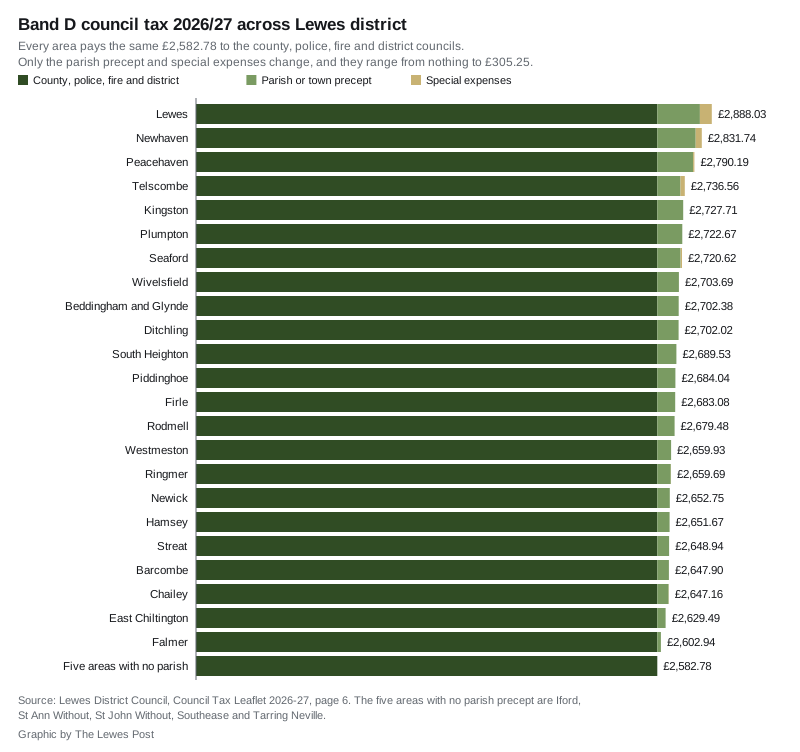
The spread at band D is £305.25, from £2,582.78 in the five areas with no parish precept to £2,888.03 in Lewes town. Every one of those bills contains the same £2,582.78 of county, police, fire and district charge. Only the parish precept and the special expenses move.
What the parish councils did this year
The parish precept is the part your district and county councillors do not control, and it is where the biggest percentage rises are. Comparing the council’s own 2025/26 and 2026/27 band D figures:
| Parish or town | Band D 2025/26 | Band D 2026/27 | Change |
|---|---|---|---|
| Falmer | £13.64 | £20.16 | up 47.8% |
| Newhaven | £179.51 | £214.78 | up 19.7% |
| South Heighton | £91.37 | £106.75 | up 16.8% |
| Newick | £64.14 | £69.97 | up 9.1% |
| Glynde and Beddingham | £109.71 | £119.60 | up 9.0% |
| Ditchling | £109.60 | £119.24 | up 8.8% |
| Barcombe | £60.08 | £65.12 | up 8.4% |
| Piddinghoe | £93.82 | £101.26 | up 7.9% |
| Plumpton | £130.16 | £139.89 | up 7.5% |
| Peacehaven | £187.84 | £200.32 | up 6.6% |
| Firle | £95.61 | £100.30 | up 4.9% |
| Rodmell | £92.77 | £96.70 | up 4.2% |
| East Chiltington | £44.87 | £46.71 | up 4.1% |
| Telscombe | £125.03 | £129.93 | up 3.9% |
| Chailey | £61.55 | £63.52 | up 3.2% |
| Lewes | £231.16 | £238.48 | up 3.2% |
| Seaford | £127.84 | £130.71 | up 2.2% |
| Ringmer | £73.89 | £75.53 | up 2.2% |
| Kingston | £141.87 | £144.93 | up 2.2% |
| Wivelsfield | £123.90 | £120.91 | down 2.4% |
| Hamsey | £70.78 | £68.89 | down 2.7% |
| Streat | £70.85 | £66.16 | down 6.6% |
Newhaven Town Council is the one to look at. It raised its precept from £723,962 to £853,474, a rise of 17.9%, at the same time as the number of properties it can charge fell from 4,033 to 3,973.7. The two together push the band D charge up 19.7%, adding £35.27 to every band D bill in the town. That is the largest cash increase of any parish in the district.
Falmer’s 47.8% is the largest percentage rise but the smallest sum. Its precept went from £1,000 to £1,500.
Three parishes cut their band D charge: Wivelsfield, Hamsey and Streat.
Westmeston is missing from the table above for a reason. The council’s leaflet prints £0.00 against Westmeston for 2025/26, next to a precept of £13,000 and a tax base of 172.9. Those two figures cannot both be right, and £13,000 divided by 172.9 is £75.19. Westmeston’s precept has been frozen at £13,000 for two years running. Its band D charge rose to £77.15 only because its tax base shrank to 168.5, not because it asked for more money.
Special expenses: the seventh charge on your bill
Lewes District Council has charged special expenses since 1 April 2014. The idea is that the cost of maintaining open spaces the council owns falls on the area where they are, rather than the whole district. Seven areas pay it.
| Area | Special expenses 2025/26 | Band D | Special expenses 2026/27 | Band D |
|---|---|---|---|---|
| Lewes | £392,231 | £61.34 | £432,640 | £66.77 |
| Newhaven | £154,371 | £38.28 | £135,800 | £34.17 |
| Telscombe | £65,856 | £25.57 | £61,960 | £23.84 |
| Seaford | £66,818 | £6.84 | £70,120 | £7.14 |
| Peacehaven | £46,897 | £9.14 | £36,520 | £7.09 |
| Ringmer | £5,037 | £2.30 | £3,040 | £1.38 |
| Chailey | £1,268 | £0.86 | £1,270 | £0.86 |
Lewes town pays by far the most, £66.77 at band D, and it is the only area where the charge went up. That is why Lewes town’s total bill is £305.25 above the district’s cheapest areas even though its parish precept alone is only £238.48.
One consequence worth knowing: the £242.02 the council quotes as “Lewes District Council” at band D is not one charge. It is the council’s own precept of £223.09 plus the district average special expense of £18.93. Nobody actually pays £242.02.
The Lewes town billing error
If you live in the Lewes Town Council area, your first 2026/27 bill was wrong.
The council announced on 14 March 2026 that the Lewes Town Council precept had been overstated on bills sent to every household in the town, by about £8 a month for a band D property. It reissued the bills and told residents not to cancel their direct debits.
The government’s own statistics carry a footnote for the same reason. They record the Lewes figures as pending a full council decision on 26 March 2026, which is later than any other billing authority in England.
If you have not seen a corrected bill, the number to ring is 01273 471600.
How to check and challenge your band
Bands were set on property values as at 1 April 1991, not today’s market.
| Band | 1991 value |
|---|---|
| A | Up to £40,000 |
| B | £40,001 to £52,000 |
| C | £52,001 to £68,000 |
| D | £68,001 to £88,000 |
| E | £88,001 to £120,000 |
| F | £120,001 to £160,000 |
| G | £160,001 to £320,000 |
| H | More than £320,000 |
Look up your own band free on gov.uk/council-tax-bands, which also lets you see your neighbours’ bands. If yours is out of line with a run of similar houses, that is the usual ground for a challenge. The Valuation Office Agency, not the council, decides bands, and you can challenge a band at gov.uk.
The council’s warning is worth repeating: keep paying while an appeal is being considered. If you win, you get a refund.
Discounts, exemptions and premiums
- Single person discount, 25%. If you are the only adult in the property. Lewes and Eastbourne are currently running a review of every single person discount in payment, and are writing to households. If you get a letter you must complete the declaration or lose the discount.
- Disregarded people. A long list, and it is longer than most people realise: full-time students, apprentices, people who are severely mentally impaired and on a qualifying benefit, 18 and 19 year olds still at or just out of school, low-paid care workers, unpaid carers on a qualifying benefit, monks and nuns, and people in prison other than for non-payment.
- Exemptions. Twenty-two classes from B to W. Class N covers a house occupied only by full-time students. Class W covers an annexe lived in by an elderly or disabled dependent relative.
- Annexes, 50% off if used as part of the main home or lived in by a relative.
- Disabled band reduction if a disabled resident needs an extra room or uses a wheelchair indoors.
- Job-related dwellings, 50% off if your job requires you to live somewhere provided by your employer and you pay full council tax elsewhere.
There are no discounts left for empty property in Lewes district. There have not been since 1 April 2020 for empty and unfurnished homes, and since 1 April 2024 for homes undergoing major renovation. Instead there are premiums, and they are steep:
- Empty and unfurnished for one to five years: 100% premium, so double the bill
- Five to ten years: 200% premium
- Ten years or more: 300% premium
- Second and holiday homes: 100% premium since 1 April 2025, on any furnished home that is nobody’s main residence
The premiums attach to the property, not the owner, so selling an empty house does not reset the clock. There are statutory exceptions from 1 April 2025, including up to 12 months for a property genuinely marketed for sale or let, up to 12 months during probate, and an unlimited exception for a home left empty because the owner is in armed forces accommodation.
If you cannot pay
Council Tax Reduction is means tested. Broadly, you cannot claim with capital above £16,000, and the lower your income the more you get. Pension-age rules are set by the government; working-age rules are set by the council.
The district also runs an exceptional hardship scheme for people who already qualify for Council Tax Reduction but are still struggling. The form is at lewes-eastbourne.gov.uk/EHP or from the council offices at 6 High Street, Lewes.
Two practical points the council does not advertise loudly. Council tax is legally payable over 10 instalments, but Lewes District Council will spread it over 12 if you ask, which cuts each payment by about a sixth. And direct debit payers get a choice of four dates, the 1st, 7th, 15th or 25th of the month, which nobody else gets.
If you have a final notice or a court summons, ring 01273 471600 rather than waiting.
More Lewes local information: bin collection days, parking in Lewes, roadworks and travel, house prices and planning news.
Every figure on this page was checked against Lewes District Council’s Council Tax Leaflet 2026-27 and the government’s council tax levels statistics for 2026 to 2027 on 31 August 2026.
Have your say